The Replacement Principle
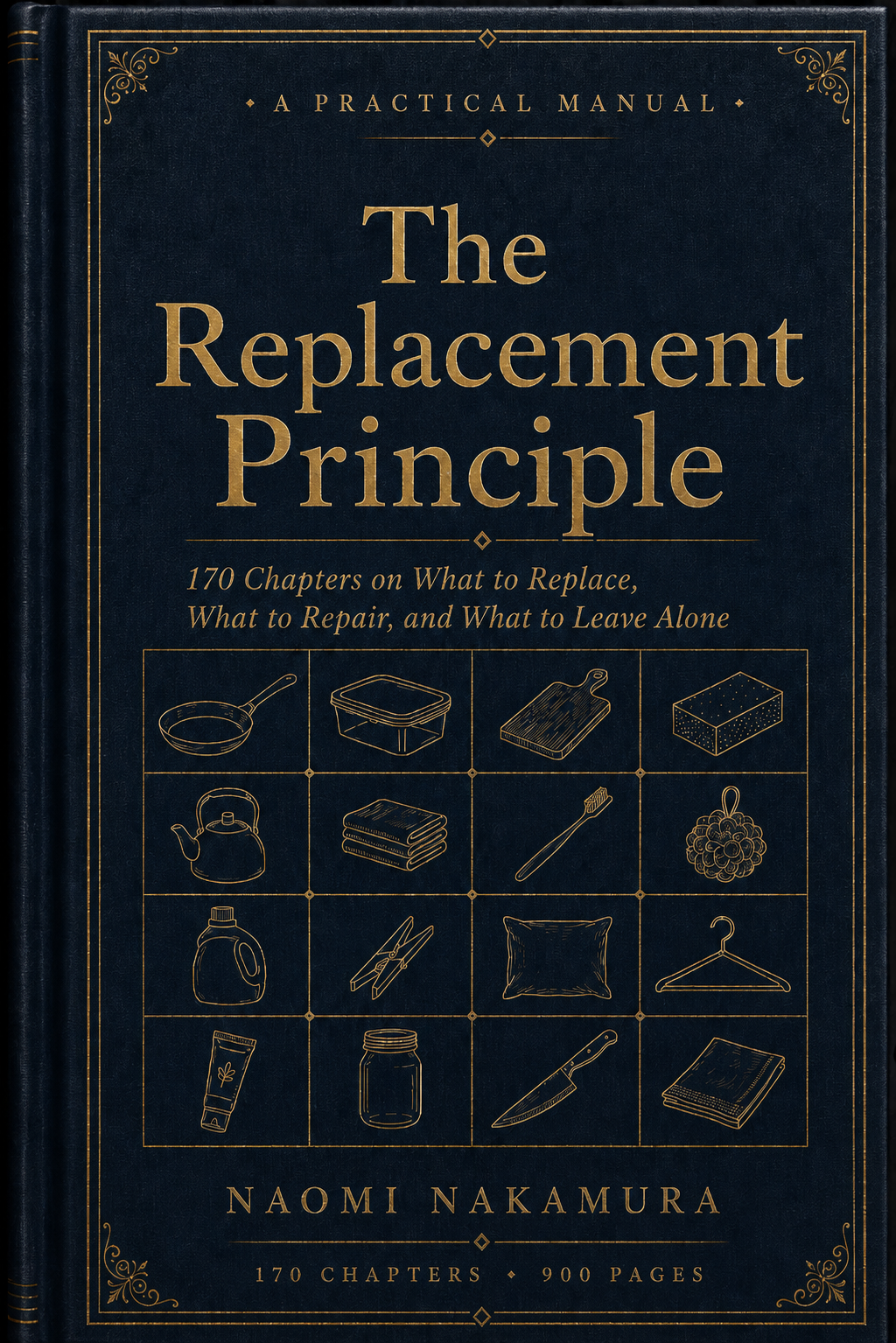
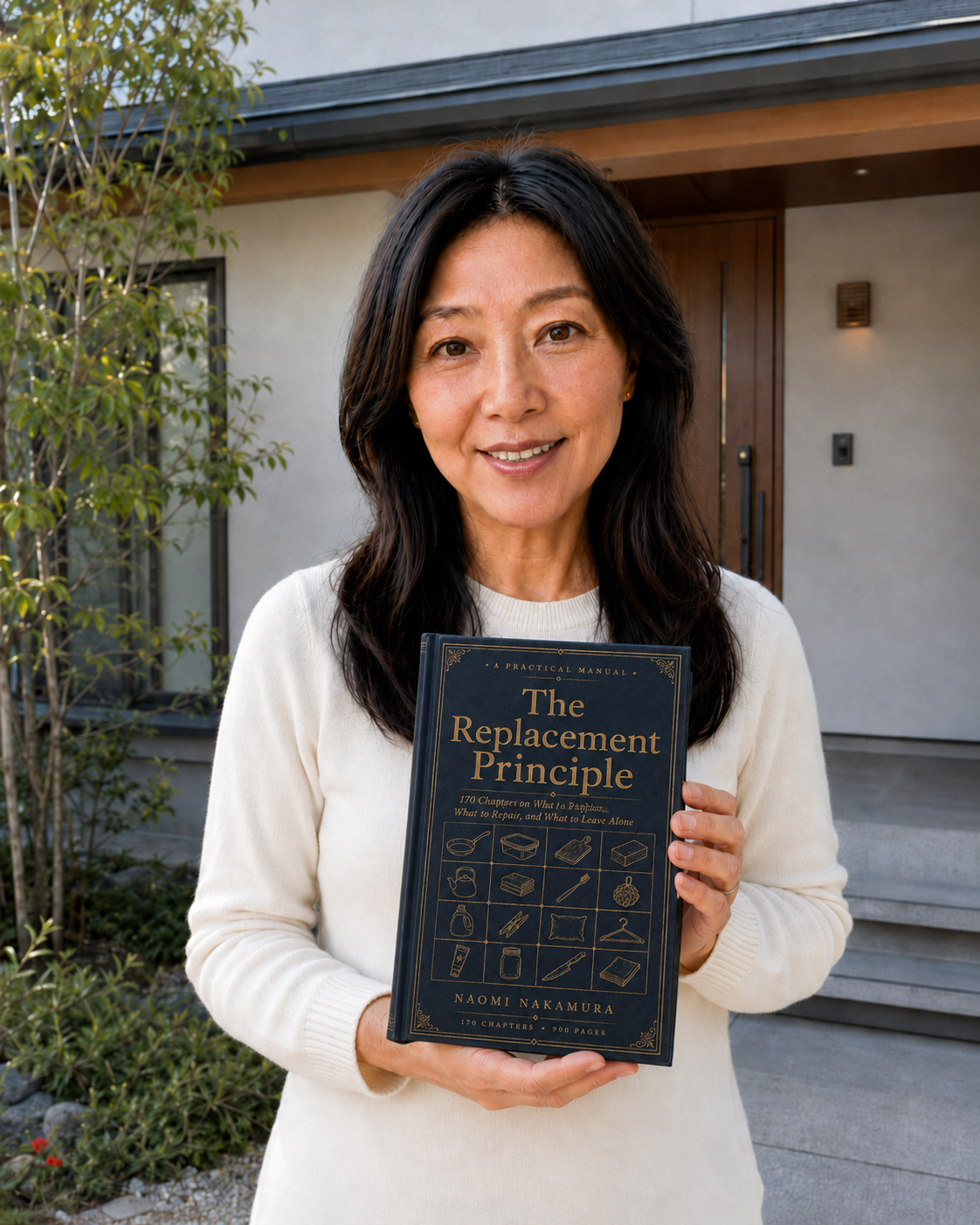
How to care for, repair, and stop replacing everything in your home — from the kitchen to the bedroom.
Two practical books by Naomi Nakamura — one for the things in your home, one for the everyday Japanese cooking habits most recipes leave out.
How to care for, repair, and stop replacing everything in your home — from the kitchen to the bedroom.
The whole-house manual and the everyday cookbook, together. Everything Naomi has written, at one lower price.
You save $9 vs. buying separately
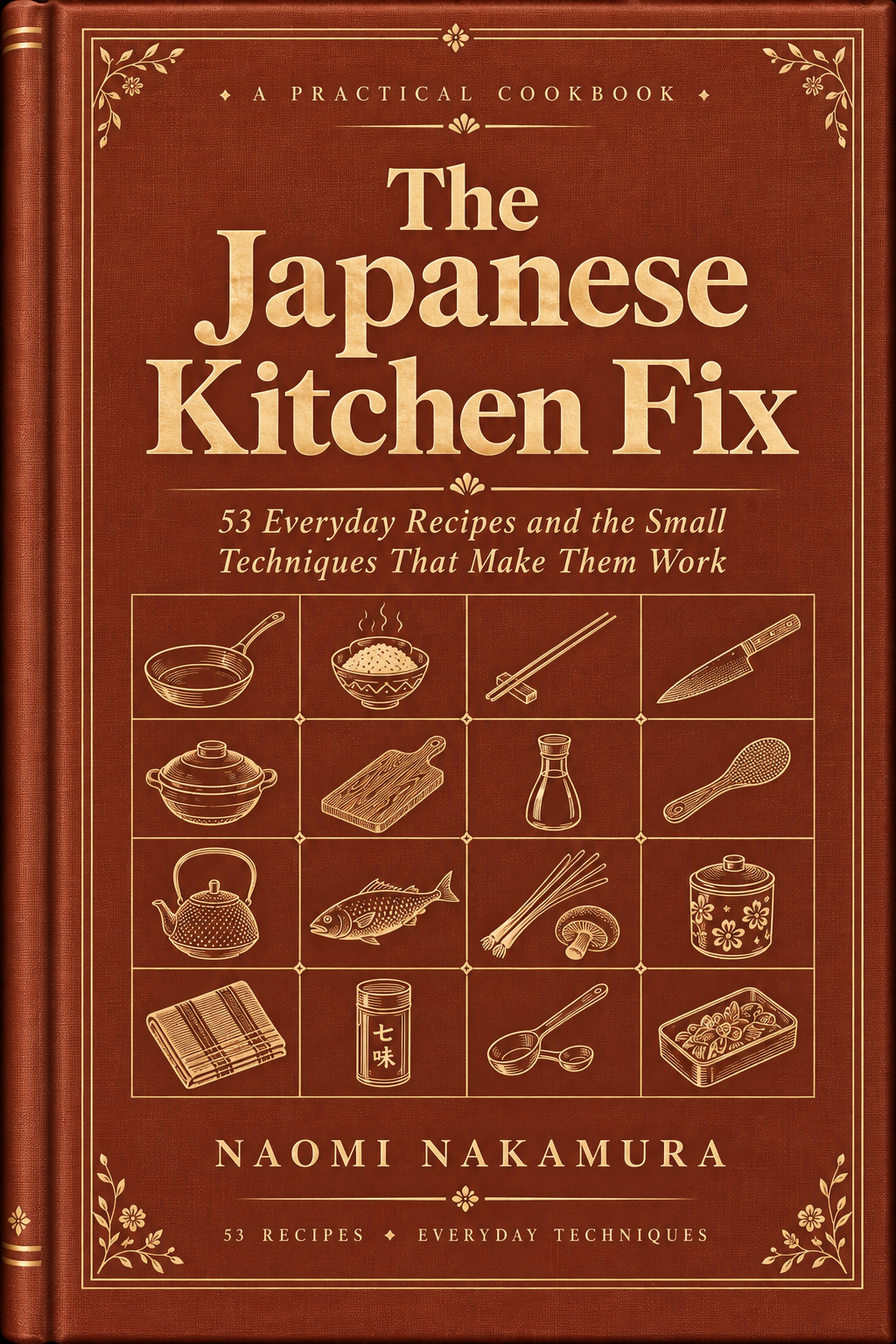
53 everyday recipes and the small Japanese home-cooking habits that make rice, chicken, fish and vegetables come out right.
I have run a household for twenty-five years. That is not a credential I ever expected to put on anything. I was not trained for this work. I learned it the way most women learn it: by making mistakes in front of people I loved, and by watching my mother make them too, and by deciding, eventually, that there had to be a better way to spend a life than fighting the same stains, the same smells, the same worn-out pans.
The first book is the complete list of what I changed in the house. The second one stays at the stove. I have cooked in small kitchens with one good saucepan, an old rice cooker and thirty minutes before someone asked when dinner would be ready. Most of what I learned there were small habits — water, heat, timing — the details that disappear when a recipe is shortened for the internet.
Neither book asks you to buy much. They are about spending less, wasting less, and doing the small things in the right order.
Things are designed to be replaced. This book is not.
Learn how to care for, repair, and stop replacing everything in your home — from the kitchen to the bedroom. 16 parts, organized by object, not by chore: the pans, the towels, the closet, the fridge, the cleaning cabinet and the 23 bottles you can stop buying.
Most household objects sold in the last twenty years were engineered to a service life shorter than their materials allow, because a shorter service life is a better business model than a longer one. The cleaning products sold to maintain them follow the same logic: fragrance, not function, is what gets repurchased.
None of this is your fault. You were not taught which nineteen ingredients actually do the work, because there is no profit in you knowing nineteen ingredients. You were taught to buy forty-one products instead. This book is the nineteen ingredients, applied to nine hundred pages of specific objects in your specific rooms.
From the kitchen to the bedroom, the bathroom to the pantry — here are the 16 main sections of the book:
Things built to fail, 5 ingredients, 12 tools, room audit, buy once, replacement ledger, what never to mix.
Non-stick pans, plastic storage, cutting boards, nylon utensils, plastic wrap, foil, sponge, paper towels, cast iron and more.
Kettle, stovetop, oven glass, range hood filter, drain, sink, dish soap, dishwasher, countertop, kitchen cloth.
Body wash, loofah, towel, toothbrush, toothpaste, shampoo, conditioner, toilet brush, bleach, and more.
Fabric softener, detergent amount, dryer sheets, tumble dryer, washer gasket, hot vs cold water, collar stains.
3 ages of body odor, 2‑nonenal, kareishū, scalp, back of neck, behind ears, chest, pillowcase, coat, sofa back.
Wash before soak, the order, temperature, sarashi cloth, exfoliation, feet, nails, morning or night, post‑bath window.
Layer order, double cleansing, what actually ages, foundation, powder, eye, brows, lip, sunscreen, neck, hands.
Blazer, sweaty shirt, jeans, wool sweater, coat lining, seasonal swap, storage, moths, shoes, handbag.
Sheets, pillow, futon logic, airing the bed, mattress, humidity, sleepwear, pet on the bed, stale room smell.
Shelf logic, door, raw meat, vegetables standing up, leftovers, odor absorption, dial, crisper drawer, cleaning, audit.
Freeze fresh, flat freezing, standing upright, portioning, labelling, seasoning before freezing, thawing, freezer burn, rotation.
Decanting, first‑in‑first‑out, buying bulk, oils going rancid, spices, rice, expiry date myth, shopping list, pantry audit.
23 bottles, fragrance is not clean, vinegar, baking soda, citric acid, salt & mild soap, the cloth, tawashi, bleach, ventilation.
Daily five, weekly walk, seasonal reset (osouji), entrance, shoes at the door, guest standard, 15‑minute reset, drift, maintenance calendar.
What this saved you, the ledger one year on, teaching others, objects you’ll keep forever, what changes when you stop buying, starting anyway, the last chapter.
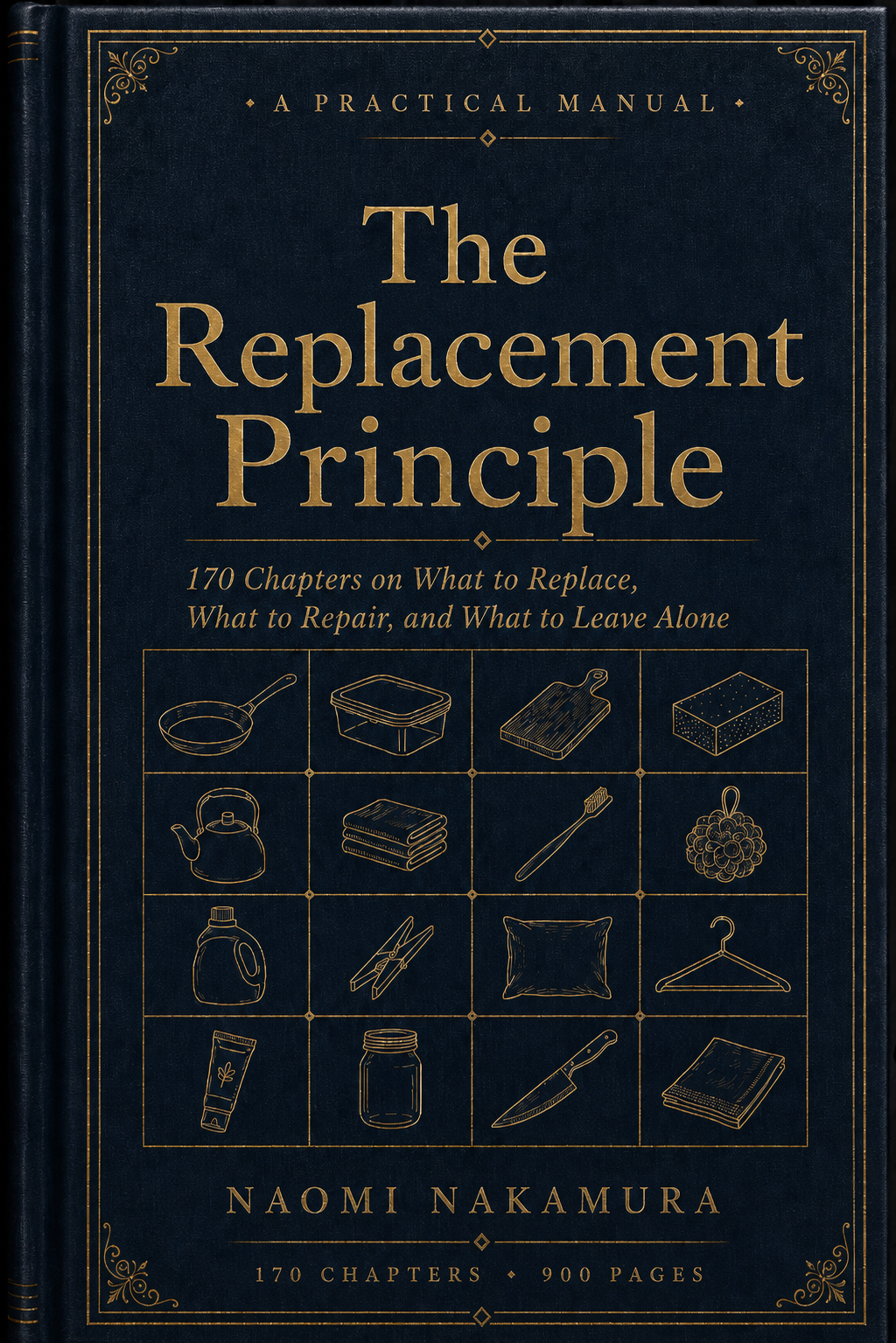
These four ideas are the foundation of every chapter. They’re simple, practical, and they work.
Vinegar, baking soda, citric acid, mild soap, and bleach. That’s all you need to clean your entire house.
No more gadget drawers. A chef’s knife, a cast iron pan, a wooden spoon, and nine others. That’s it.
Five tasks, two minutes each, every day. The house never gets messy enough to need a deep clean.
Write down what you buy, what it cost, and how long it lasted. One page that saves you thousands over time.
A book that only tells you what it can do is a book that hasn't been tested on a real house. Here is what it won't.
This is a book about caring for objects, not a system for organising a room.
A cutting board split all the way through, a pan warped past flat — some damage is past the point where care helps.
Nothing diagnoses, treats, or replaces guidance from a physician.
Some finishes, fabrics, stains are made worse by intervention. The book says so.
Cast iron needs seasoning. Grout needs sealant. Forty minutes means forty minutes.
Where a warranty depends on a named product, the book tells you up front.
53 everyday recipes — and the small techniques that make them work.
Rice that isn't wet. Chicken that browns before it steams. Miso soup that doesn't taste harsh. Naomi explains the small Japanese home-cooking habits recipes usually skip — written for an ordinary American kitchen and ordinary supermarket ingredients.
Each part opens with the one habit that matters most for that kind of food, then the recipes that use it.
Short-grain rice on the stove, salmon & sesame onigiri, salmon ochazuke, mushroom takikomi gohan, ginger chicken rice.
Fast kombu dashi, everyday miso soup, pork & root vegetable soup, kakitama egg soup, mushroom clear soup.
Weeknight shoyu ramen, miso corn ramen, kitsune udon, cold zaru soba, yaki udon with cabbage, sesame soba salad.
Skillet teriyaki chicken, chicken karaage, oyakodon, chicken katsu, chicken soboro don.
Gyudon, ginger pork (shogayaki), pork tonkatsu, nikujaga, Japanese hambagu, butadon.
Miso-glazed salmon, salt-grilled mackerel, salmon teriyaki, shrimp tempura, garlic-soy shrimp.
Spinach goma-ae, cucumber sunomono, Japanese potato salad, nasu dengaku, kinpira carrots, cabbage with sesame & soy.
Pan-fried gyoza, rolled tamagoyaki, agedashi tofu, quick pickled cucumbers, okonomiyaki.
Japanese beef curry, chicken katsu curry, omurice, salmon chirashi bowl, unadon-style eel bowl.
Dorayaki, matcha milk pudding, black sesame shortbread, quick mentsuyu, creamy sesame dressing.
Better cooking usually does not require better ingredients. It requires knowing what to do before the food enters the pan — and when to stop touching it.
Gentle rinsing, drained rice, measured water and a closed lid while it rests. That is most of good rice.
Kombu for depth, bonito for aroma — or low-sodium broth on a weeknight. It changes the flavor, and that is fine.
Hot broth, seasoning, cooked noodles, toppings. Warm the bowls and cook noodles separately.
Dry before coating, fry a few pieces at a time and drain on a rack so steam can escape.
Use the same pantry more than once. Prep rice, scallions and sauce once, then cook through the week.
Chicken is gray. Rice is wet. Coating is greasy. Miso soup tastes harsh. Find the cause and the fix.
About ten core ingredients — soy sauce, miso, mirin, rice vinegar, potato starch — not a $300 imported pantry.
These are home-style dishes. Where a recipe is Naomi’s own adaptation, it is labeled that way.
Most recipes use ordinary supermarket ingredients, with practical substitutions where they genuinely work.
A skillet, a lidded saucepan, a sheet pan and a thermometer cover most recipes. No donabe required.
Safe internal temperatures follow current USDA guidance, and every recipe says when to use a thermometer.
One book covers every object in your home — the pans, the towels, the closet, the cleaning cabinet. The other stays at the stove: rice, noodles, chicken, fish and the small habits that make them work. Both start from the same idea: learn the small things before you buy anything new.
This book is newly published, so there isn't a long list of reviews yet. Real ones will be added here as they come in — nothing on this page is invented.
“This book has already saved me from buying a new cast iron pan. The instructions were so clear and it worked perfectly. I wish I had this years ago.”
“I'm not a handy person, but this book made me feel capable. The grout section was a lifesaver. My bathroom looks brand new.”
“Finally, a practical guide that doesn't assume I have a workshop full of tools. The '19 ingredients' approach is genius. Highly recommend.”
If a book isn’t what you hoped, reply to your delivery email within 7 days for a full refund. That goes for each book and for the bundle. No questions asked.
Your privacy matters to us. We collect only the information necessary to process your order: your name, email address, and payment details. This information is used solely for order fulfillment and to send you updates about your purchase.
We do not sell, rent, or share your personal data with any third parties. Your email address is used only for transactional emails and occasional book‑related updates (you can opt out at any time).
No subscription, no special app, and no cupboard of proprietary products.
Choose the book that solves today’s problem — or take both and set up the whole house once.
Compare the three options ↑